
Previous Residents of a Menifee Address
Each source covers a different era and records a different relationship to a parcel. The recorder shows transfers and other instruments. The assessor ties the present APN to the public owner at an office. Permits show construction or change. Census and directories show households or subscribers. Probate and obituaries can close a family trail. The table is an era map, not a promise that every year or name appears.
| Source | Years it covers | Where held | What it shows |
|---|---|---|---|
| Recorder web index | January 1, 1974-present | Riverside ACR web and office | Parties, document type, date, number |
| Earlier deed books and indexes | 1893 forward; predecessor counties may matter earlier | ACR, archives, microfilm | Pre-1974 title chain and maps |
| City and county permits | Menifee city era after 2008; county before or outside city | Menifee Building & Safety or TLMA | Work, applicant, contractor, project dates |
| Federal census | Public through 1950 | NARA, FamilySearch, libraries | Household names, ages, relationships |
| Directories and reverse sources | Exact Menifee runs not published | Libraries, State Library, museum | Occupant or subscriber by year |
| Probate and obituary | Case or publication specific | Riverside court, newspapers, repositories | Death, heirs, relationships, later address |
The strongest previous-residents trail uses at least two layers for each time jump. A deed names a party, a directory supplies a household clue, and a census or obituary tests whether the person belonged to the address. When an entry disappears, the gap needs a reasoned check rather than a guessed move.
Note: A parcel’s legal description is the continuity key when a Menifee street name or subdivision changes.
Begin Menifee Previous Residents with Current Parcel
Do not begin with a guessed former occupant. Run the current street address through Riverside County Property Search, record the APN, situs, legal description, and map references, and check the parcel in Map My County. Riverside’s online property search gives parcel facts but withholds owner names online. A public-service office can provide public owner and roll mailing information by address or APN.
Then note whether the present parcel is a subdivision, a vacant-land parcel, or a lot whose street label may have changed. The legal description becomes the continuity key. A mailing address can point away from the land, and a current owner is not automatically a past occupant. The backward trail starts with the land identity and only then adds names.
The assessor and recorder FAQ explains why the online address step and office owner step are separate.
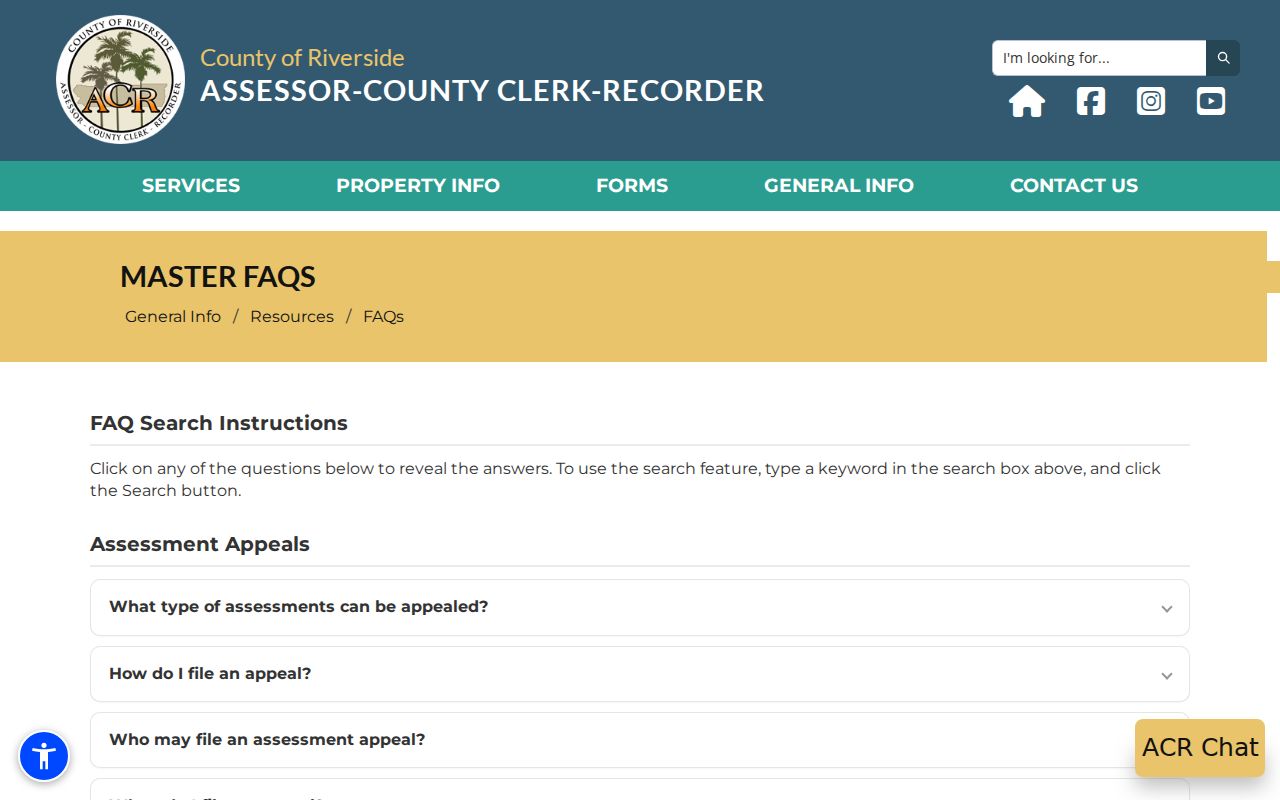
The assessor record is a parcel anchor, while the owner and mailing fields require the county’s in-person access route.
Note: The current owner is a parcel lead, not proof of a former occupant or every household connected with the land.
Walk the Menifee Previous-Residents Deed Chain
The Riverside recorder web index begins January 1, 1974. Search the current assessed owner as a grantee, constrain the date and document type, and open the purchase deed. Record the grantor, recording date, document number, APN, and legal description. Then search that grantor as an earlier grantee. A grantor is the person transferring an interest. A grantee is the person receiving it.
- Resolve the present address to an APN and legal description.
- Obtain the public owner through an assessor office by address or APN.
- Search that name in the ACR recorder index as a likely grantee.
- Read the deed, confirm the same lot, and record the seller or grantor.
- Repeat the grantee search for the earlier seller until the online cutoff.
The ACR name form uses surname-first entry such as Last First MI. Advanced mode supports parcel number, case number, legal remarks, document number, and map type or book-page fields. The chain must follow the parcel, not just a repeated surname.
The Riverside recorder name search is the starting form, and the official results portal explains the coverage and copy route.
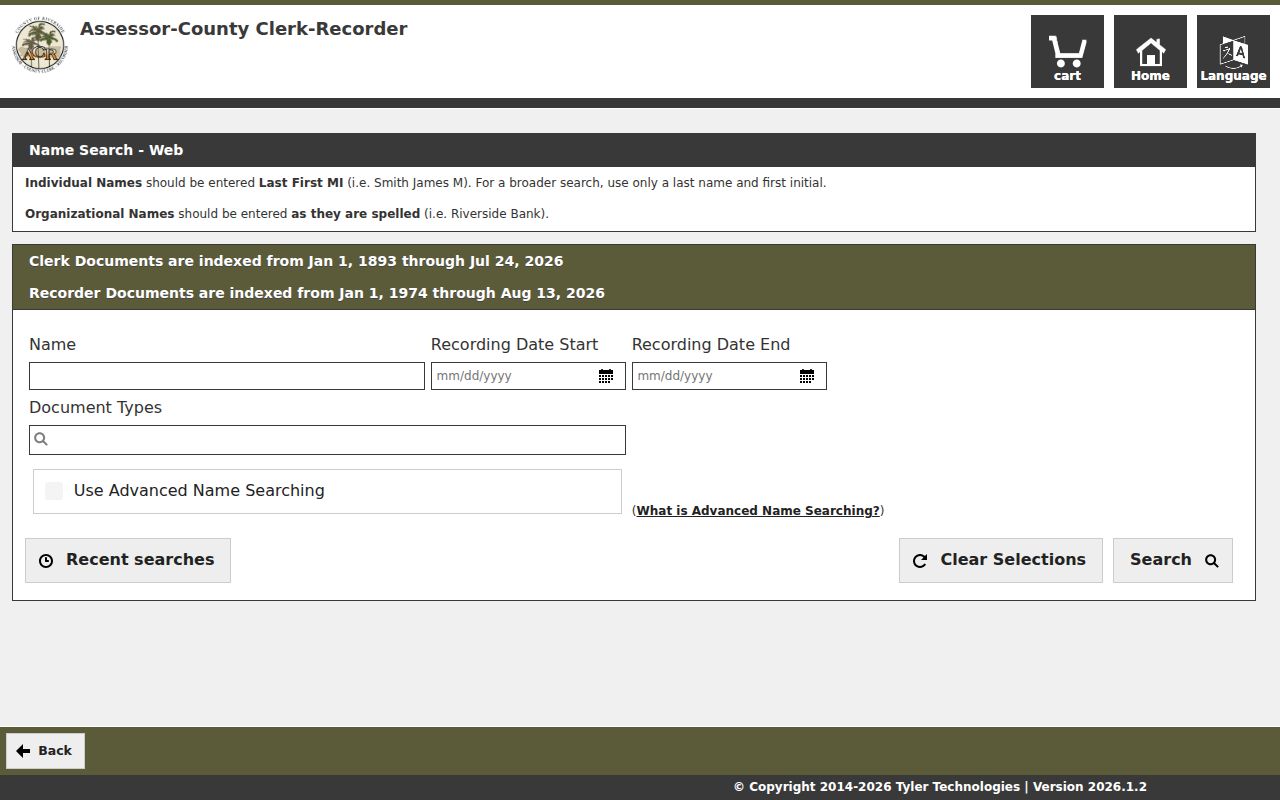
A free index result can identify the next document to inspect, while the recorded image supplies the legal wording needed to keep the chain intact.
Note: A grantor or grantee is a role in an instrument, not proof that the person lived at the property.
Menifee Previous Residents Before 1974
When the web index reaches 1974, switch channels. Riverside ACR physical indexes, deed books, office viewing, and archival microfilm can carry the title search earlier. Riverside County was formed in 1893, so predecessor San Bernardino or San Diego county records may matter for an older parcel or land event. Ask the custodian how the property’s legal description maps to the earlier books.
Copies ordered through ACR cost $8 for the first page, $1 for each additional page of the same document, and $2 for certification. There are no refunds after copies are made. Images may be viewed in an office. A copy request needs a document number or a well-defined party, date, record type, and parcel clue.
The ACR recorded-document copy route covers online, mail, and counter paths.
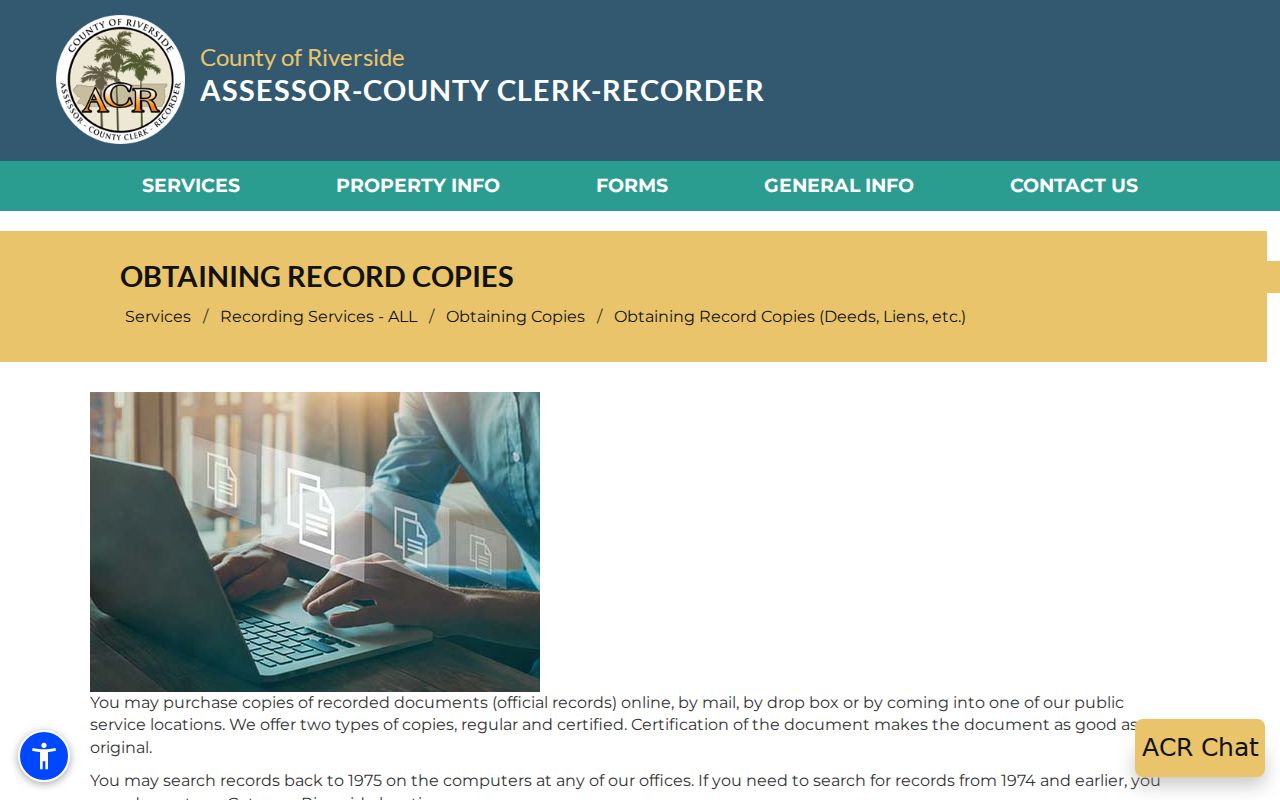
Older title work is slower because the researcher must move from a searchable web index to books, microfilm, maps, and staff guidance.
Note: Riverside’s online recorder index begins in 1974, so earlier Menifee title work needs office or archive channels.
Menifee Past Residents and 1893
One parcel trail may cross San Diego County or San Bernardino County predecessor records, Riverside County from 1893 forward, and the City of Menifee after 2008. The land did not necessarily move when the custodian changed. A previous-residents search should record the jurisdiction for each deed, court file, vital event, permit, and newspaper rather than applying today’s city name backward.
Riverside County’s 1893 formation and Menifee’s June 3, 2008 incorporation are the two major breaks. Earlier land, court, and vital research may require predecessor indexes. Pre-2008 permits and planning matters may remain with county agencies. Later city agendas, ordinances, and project notices belong to the Menifee archive.
Historical quirk. A single Menifee address can pass through three record jurisdictions without the parcel moving. Change the search office before assuming a person moved.
This is why a modern APN and a nineteenth-century legal description should be written side by side. Street names and municipal labels are helpful, but the lot controls the chain.
Search Permits Before and After Menifee Incorporated
Permits add construction dates and project context to previous residents research. Menifee Building & Safety, Planning, and Engineering hold city-era routes. Older or unincorporated files may be with Riverside County TLMA or RivCoPlus. A permit can identify an applicant, contractor, project description, inspection, or parcel number. It documents work at a property, not every person who used the building.
The public ACA portal did not state a reliable earliest online year. Search by address or parcel, then file a focused records request for an existing permit or code file when the portal has no result. A construction date can separate a bare farm parcel from a later house, but it cannot by itself name the first household.
Menifee’s advanced official-records search gives a useful companion route when a former parcel name or legal remark is known.
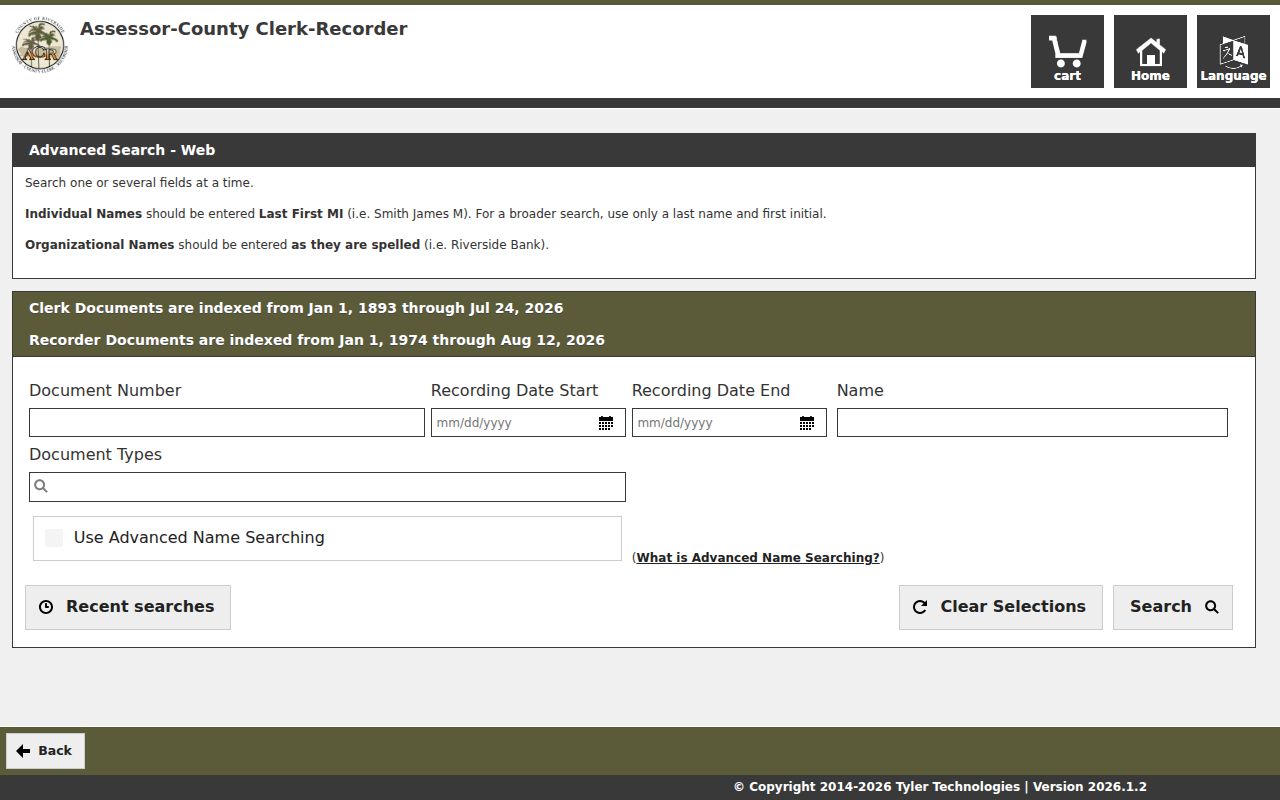
Advanced recorder fields and permit records work together when an address has several legal or project names.
Menifee Previous Residents in Censuses
Federal census records are public through 1950 under the 72-year release rule. For Menifee-area history, local use is chiefly 1880 onward. Census entries can provide names, ages, relationships, occupations, and household structure at a ten-year interval. They do not show every move and may use a township, precinct, post office, or rural-route description.
Pair each census with directory years that fill the decade gap. Search the same family under Menifee, Sun City, Romoland, Quail Valley, Perris Valley, and Riverside County. A directory gives a yearly address or subscriber clue. A census tests household membership and age. A deed tests title. An obituary or probate file can explain a later disappearance.
When a record is not online, ask Menifee Library, Sun City Library, or the California State Library about library databases, microfilm, newspapers, and reference copies. Do not promise a subscription; confirm what the branch currently provides.
Menifee Previous Residents Under Older Headings
Exact Menifee Polk, reverse, and obituary year runs were not located in an official published holding. That is a research gap, not evidence that no volume exists. Ask for Sun City, Perris Valley, Romoland, Quail Valley, Menifee Valley, and Riverside County headings. A city directory’s reverse section may list a street and subscriber, while a telephone book may use an older locality name.
Read the title, copyright, publisher, coverage list, and abbreviation key before using an entry. Record adjacent house numbers and the name as printed. A missing name can mean an unlisted number, a missing year, a moved family, a changed heading, or a volume that did not cover the rural area.
The historical shelf itself is covered in the Menifee city directory collections page. Previous residents research uses those collections as dated evidence while keeping the parcel chain central.
Menifee Previous Residents and Legal Descriptions
Street labels can change with subdivision, annexation, postal convention, or a new municipal map. The deed’s legal description is more durable than a casual address string. Compare lot, block, subdivision, parcel map, APN, and metes-and-bounds wording. If a road name differs between a census, permit, and deed, test the legal land identity before calling it a move.
- Grantor
- The party transferring an interest in a recorded instrument.
- Grantee
- The party receiving the interest.
- Chain of title
- The linked sequence of transfers for one parcel.
- Legal description
- The recorded wording that identifies the land independently of a mailing label.
Map My County can search by legal description and assessor book or page. The city maps page adds Street Name Lookup and boundary layers. Keep screenshots or notes tied to a date, because parcel layers and planning data can change.
The present address can be a clue for the next source, but the legal description is what allows previous residents to be connected across renamed or relabeled streets.
Menifee Previous Residents and the Perris Map
The Library of Congress record for the 1890 Perris Sanborn map is the nearest verified period fire-insurance map in the research. It can add context for Perris-linked commerce, rail, and buildings during the Menifee Valley’s farming and mining era. It is not a Menifee house map and cannot be used to assign a modern APN.
Use the map with newspapers, land records, school or post-office records, and family material. It may explain why an earlier resident appears in Perris records even though later sources use Menifee. Label it regional evidence in the research notes and do not turn a visual similarity into a title conclusion.
The 1890 Perris Sanborn map is the verified digital archive source.
Close a Menifee Previous-Residents Trail
Probate and obituary research can close a former-household trail. Riverside probate petitions, notices, inventories, and distributions may identify a decedent, petitioner, heirs, and addresses. An obituary can add relationships, schools, organizations, and a later city. Verify those clues with a death record or court file. A memorial page is a lead, not a certified record.
If a person disappears from a deed or directory, test death, marriage, migration, an unlisted year, and a locality relabeling. If the address continues, follow the parcel. If the parcel splits, use the subdivision map and new APNs. If the record is protected, accept the gap and use the authorized route rather than trying to defeat it.
House-history limit. Previous residents research is lawful when it supports family history, an estate, or documented place history. Do not use an old address trail to stalk, harass, intimidate, or harm anyone.
The strongest result is a dated chain with a source for each link: APN, deed, legal description, permit, directory or census, and probate or obituary where applicable. When one link is not available, say so plainly.
Note: A house-history conclusion is strongest when deeds, directories, census clues, and family records agree on the same address.